
Giving caregivers peace of mind
A tragedy turned into an opportunity to give caregivers a pair of extra eyes especially in a fall or when a loved one wanders off.
Imagine hearing a loved one’s voice calling your name over the phone, and then, sudden silence. This is the heartbreak that Ivan Mun experienced on the day his 73-year-old aunt collapsed at home in 2023. He arrived too late to help, and that moment, being able to hear her but unable to save her, changed his life.
He however turned this incident into finding a way to prevent others from experiencing similar helplessness. Ivan built ELLO Care, an AI-powered smart camera system to give caregivers peace of mind through silent, intelligent monitoring, unlike ordinary security cameras that bombard caregivers with constant pings. If a loved one falls, faints or wanders out of the house and doesn’t come back, ELLO Care will immediately send an alert.
Ageless Online speaks to 45-year-old Ivan about his company and the day he lost his aunt:
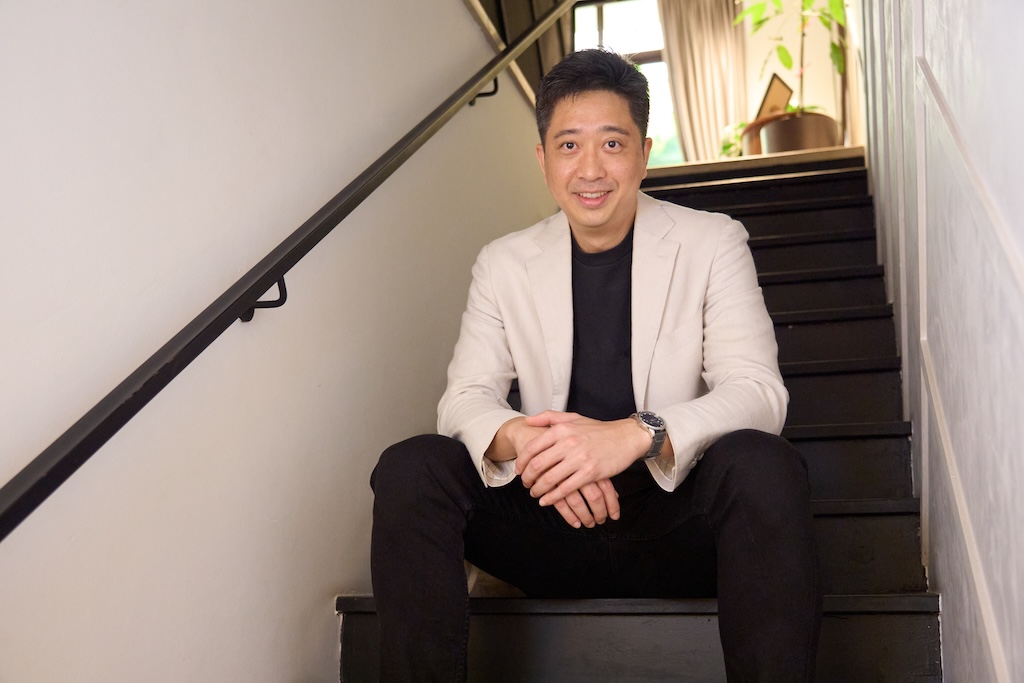
Ivan Mun, founder of ELLO Care.
Can you share the impetus in starting ELLO Care – your aunt collapsing at home and what happened?
Aunty Heng was single, healthy and fiercely independent. I was her handyman – fixing her cable TV, helping her read letters, and changing light bulbs when they failed.
At one point, she fell seriously ill and was hospitalised for over four weeks. The morning she was discharged, my brother sent her home as I was tied up at work. That afternoon, my mum called. Aunty Heng was having some difficulty breathing and asked if I could check in on her.
I assumed it wasn’t serious. She had just been discharged, and I told my mum I’d visit her in the evening before dinner. On my way there, I called to let her know I was coming and to ask if she needed anything. She picked up, called my name … and then the phone dropped. That was the last time I heard her voice.
When I arrived, she had unlocked the door for me, I rushed in and found her slumped in her usual armchair. I was too late.
After her funeral, I replayed that moment countless times. What if I had called an ambulance immediately? What if I hadn’t wait until the evening? What if I had reached her sooner? None of the “what-ifs” changed the outcome.
Later, a friend asked me, “Why doesn’t ELLO focus on supporting caregivers?” That question clicked like a missing puzzle piece. If caregivers could monitor the people they care for safely, or receive real-time alerts with visual context when something goes wrong, they’d have clarity, not guesswork. They’d make faster, better decisions when it matters most. That moment became ELLO’s pivot – from home security to elderly care.
I understand before you put together the system, you spoke to many professional and family caregivers in Singapore for several months. What were some key takeaways you got which helped you put together ELLO Care?
Caregivers are some of the most under-appreciated people in our society. There’s a lot of focus on supporting the elderly or those with chronic conditions, but very little aimed at easing the burden on the caregivers themselves.
They give up time, social lives, and often career opportunities – all to care for the people they love. Sometimes, what they really need is a moment to breathe. To recharge. To recalibrate. To regain balance.
But stepping away comes with constant worry. What if something happens and I don’t know? And that worry turns into guilt. Caregivers can’t pour from an empty cup. If their cup isn’t filled, they can’t care effectively – and when caregivers burn out, the entire care ecosystem breaks down.
ELLO is designed to help them watch over the well-being of the people they care for, so they get real-time notifications only when something happens, and they can respond immediately, without having to constantly worry.
There are a number of tech products that do exactly what ELLO Care’s Vision One does. What makes your product different?
I wouldn’t say most tech products do what we do. Today, many caregivers rely on standard home Wi-Fi cameras. But those cameras generate constant motion alerts. Over time, caregivers experience notification fatigue – and the alerts that matter most get ignored.
There are also fall-detection devices in the market. They trigger an alert when someone has fallen or fainted, but they don’t provide context. ELLO goes further.
We can distinguish between a fall and a faint, because the response required is different. We provide wandering alerts, designed specifically for people with dementia who leave home and don’t return. We monitor routines – if grandpa doesn’t leave his bedroom at his usual time, caregivers are notified so they can check in early, not react late.
Most importantly, we simplify everything through the ELLO bot. Instead of jumping between multiple camera feeds, caregivers can simply text ELLO questions like, “What’s dad doing right now?” ELLO analyses the latest visual information and returns a clear, contextual update.
Less noise. More clarity. Better decisions when it matters.
Tell me more about Vision One and how it works for the caregivers and their loved ones?
 Vision One is a five-megapixel camera that works seamlessly with the ELLO app.
In a typical HDB home, we usually recommend two cameras – one that is positioned to cover the living room, front door and bedroom entrance, and a second that covers the dining area or kitchen at the back of the home.
During onboarding, ELLO walks the caregiver through a short Q&A to understand the layout and daily dynamics of the home. Think of it as a virtual mapping process – it gives ELLO context for what it’s seeing. So when grandpa walks out of a door, ELLO knows whether that’s the bedroom door or the front door, and can interpret the situation accurately.
Once set up, ELLO runs quietly in the background. It doesn’t flood caregivers with alerts.
Only when a meaningful event occurs, such as a fall, a faint, smoke or fire, or a dementia-related wandering incident, does ELLO notify the caregiver. Each alert includes a short video clip showing what happened. That visual context gives caregivers immediate clarity – what led to the incident, what the person was doing, even what they were wearing – so they can make informed decisions quickly and confidently.
When was it launched? I understand Vision One is only shipping in March. How many people have pre-ordered so far in Singapore?
ELLO was introduced in December 2025. We’ve around 30 pre-orders that’ve been fully paid and 300 on the waitlist.
We’re also working to establish partnerships with some of the non-profits to better help them manage some of the elderly who have no children, but need monitoring.
I saw that Vision One is S$56 but I understand there is a monthly subscription on top of that. What does that entail and how much are we talking about?
Currently, there is a 30-percent early bird discount till March 30 on the ELLO device. There is also a monthly subscription of S$29.90 for monitoring services of up to five devices. The monthly subscription allows us to run the monitoring engine – the key to what ELLO is about. This gives users the access to the 24/7 AI engine that runs on cloud.
Is the recommendation to have several cameras in all rooms rather than just one?
Due to privacy, we do not recommend to place cameras in bedrooms, only in common areas like the living room, dining and kitchen. However, we do hear of caregivers installing cameras in bedroom as well, so it’s largely up to the individual.
Will you be introducing other products for caregivers besides Vision One?
Yes, we plan to expand our hardware lineup. This includes pan-and-tilt cameras, as well as non-intrusive thermal or radar-based sensors that can be used in more sensitive spaces like bedrooms and bathrooms, allowing for safer, more complete home coverage.
Beyond hardware, we’re also expanding into behavioural monitoring. By understanding daily activity patterns, ELLO can help caregivers see when elderly loved ones are becoming less active. That allows caregivers to encourage movement earlier, before prolonged sitting or inactivity turns into a health issue.
The goal is simple – not just responding to incidents, but supporting healthier, more independent daily living.
0 Comments